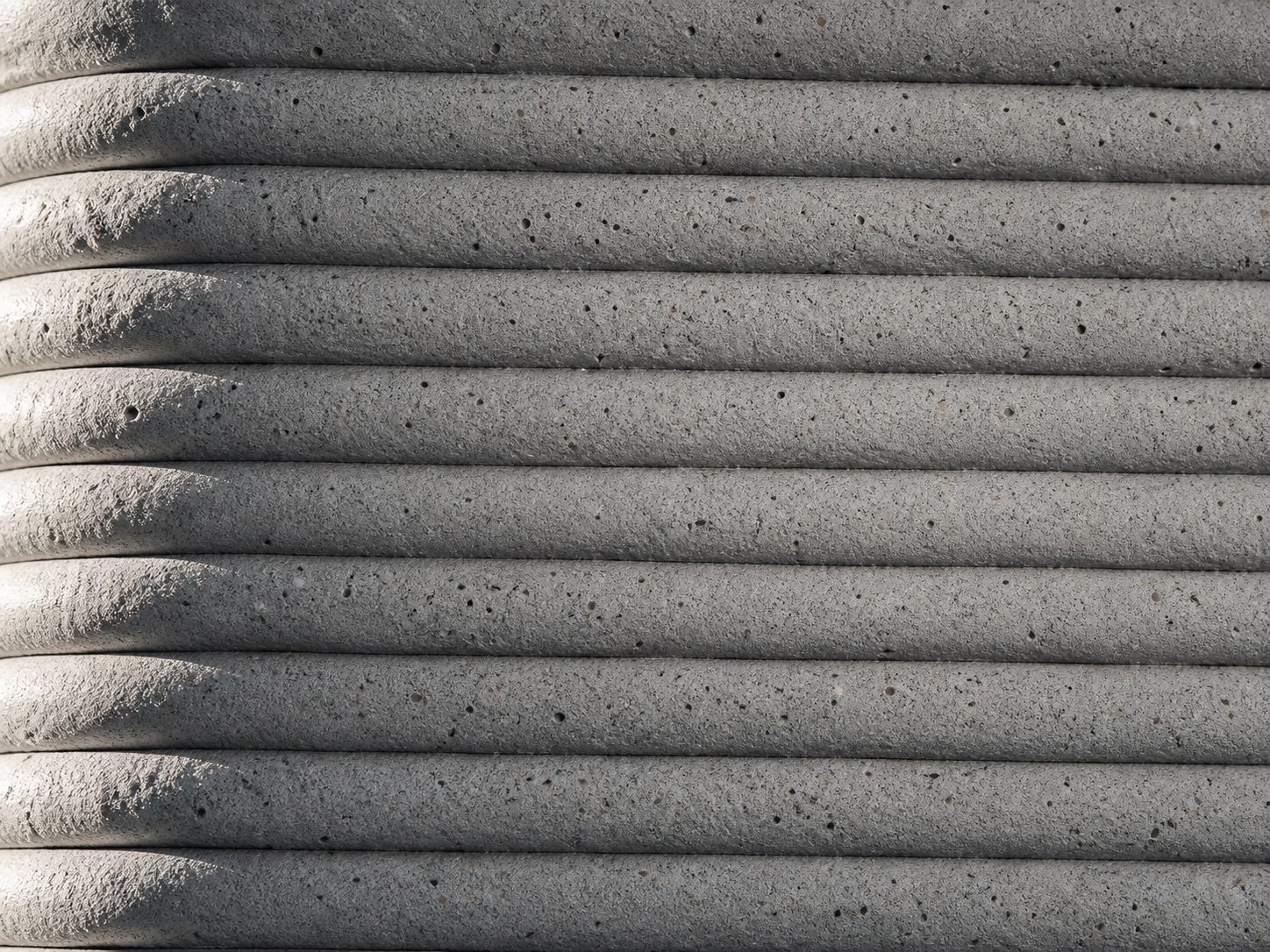
Printable mortar is sometimes treated as a recipe problem: select binder, sand, water and admixtures, then search for the mix that works. In practice, printability is not held by the material alone. It is created by the material interacting with pumping, nozzle geometry, deposition speed, layer height and time.
A printable mix has competing jobs
During pumping, the material needs to flow. After deposition, it needs to behave almost in the opposite way: it must resist deformation, support new layers and keep enough surface condition to bond to the next bead. A mix tuned for only one of those jobs will not be reliable.
- Too fluid: easy pumping, weak shape retention and higher slump risk.
- Too stiff: better standing behaviour, higher pumping pressure and blockage risk.
- Too fast setting: early stability, but poor layer bonding after delays.
- Too slow setting: longer open time, but limited build height and geometry stability.
The nozzle changes the material
The bead that leaves a nozzle is not just the mix that entered the pump. It has experienced shear, pressure, confinement and geometry change. Nozzle size, outlet shape and travel speed all influence bead surface quality, compaction and final width.
This is why material development has to be tested through the actual extrusion path. Flow-table numbers and lab rheology are useful, but the final question is whether the material forms a consistent bead in the intended process window.
Layer bonding is a timing problem
Adjacent layers have to become one structural body, not a pile of separate strips. The time between layers, surface moisture, material stiffness and contact pressure all influence whether that happens.
For this reason, SRLK Tech develops material understanding alongside extrusion control and process documentation. The aim is not only to find mixes that print, but to understand why they print and where the limits sit.